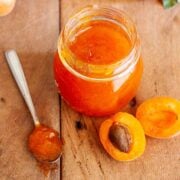
Apricot Jam Without Pectin
This homemade apricot jam without pectin is made with fresh apricots, sugar, and lemon juice. No thermometer needed, just the easy cold plate test.
Servings 4 -5 cups
Equipment
- Digital kitchen scale
- Large wide heavy-bottomed pot
- Long-handled wooden spoon
- immersion blender
- 2–3 small plates
- Sterilized jars with lids
Ingredients
- 3.3 lb apricots washed and pitted (1.5 kg)
- 5¼ cups granulated sugar 1,050 g, or 5 cups (975 g) if your apricots are very ripe and sweet
- ¼ cup fresh lemon juice 60 ml
Instructions
- Wash the apricots, remove the pits, and weigh the prepared fruit.
- Place 2–3 small plates in the refrigerator to chill. You’ll use them later to test if the jam has set.
- In a large heavy-bottomed pot, layer the apricots and sugar. Let the mixture sit for about 1 hour, so the fruit releases its juices and the sugar begins to dissolve. I usually do 3 layers.3.3 lb apricots, 5¼ cups granulated sugar
- Add the lemon juice and stir the mixture well with a long-handled wooden spoon before heating. This helps prevent the fruit from sticking to the bottom of the pot.¼ cup fresh lemon juice
- Place the pot over low-medium heat, stirring often, then gradually increase the heat to medium. Bring the mixture to a gentle boil and continue stirring until the sugar dissolves.
- Reduce the heat to medium-low and cook, stirring frequently. As foam forms on the surface, skim it off with a spoon.
- After about 15–20 minutes, the fruit will soften, the foam will disappear, and the mixture will begin to thicken. As the jam reduces, stir more often to prevent it from sticking or scorching. Use an immersion blender to blend the jam to the consistency you like.
- After about 10 more minutes of cooking, begin checking for doneness. Remove the pot from the heat and place a small spoonful of jam on one of the chilled plates.
- Put the plate back in the refrigerator for about 1 minute, then take it out and gently push the jam with the back of a spoon. If the surface wrinkles slightly as you push it, the jam is ready.
- If the jam is not ready, return the pot to the heat and cook for 1–2 more minutes. Always remove the pot from the heat before testing again to prevent overcooking.
- Once the jam reaches the desired consistency, remove it from the heat and let the bubbling settle for a few minutes.
- Carefully spoon the hot jam into sterilized jars and seal with lids. Let the jars cool completely before storing in the refrigerator.
- Enjoy!
Notes
- Use ripe, good-quality apricots. Choose apricots that are ripe, fragrant, and free from bruises or mold. The better the fruit tastes, the better the jam will taste.
- Weigh the apricots after pitting. For the most accurate results, weigh the fruit after removing the pits. Jam making relies on the right balance of fruit, sugar, and acid.
- This recipe uses 700 g sugar for every 1 kg of prepared apricots. If your apricots are exceptionally sweet and fully ripe, you can reduce the sugar slightly, but the jam may have a softer set and the cooking time may vary. Use the chilled plate test to check when it’s ready.
- Measure accurately. For best results, use a digital kitchen scale.
- Use a wide, heavy-bottomed pot. A wide pot helps excess moisture evaporate more quickly, while a heavy-bottomed pot helps prevent scorching.
- Test the jam carefully. Always remove the pot from the heat before testing the jam on a chilled plate. This prevents the jam from continuing to cook while you check the consistency.
- The jam will continue to thicken. Don’t wait for it to become very thick in the pot. It will continue to set as it cools.
- Sterilizing jars: I always sterilize my jars before making jam. For safe and up-to-date recommendations, I follow the guidelines from the National Center for Home Food Preservation, based on USDA recommendations.
- Storage: Store the jam in clean, sterilized jars in the refrigerator for up to 3 weeks. For longer storage, freeze in freezer-safe containers for up to 6 months, leaving ½ inch of space at the top. Thaw overnight in the refrigerator before using.
I have a detailed picture tutorial in my post to help you out with each step of the recipe as well as lots of tips to ensure success. Baking Measurements
I have used weight measurements for all the recipes on this website. Even though I have also included American volume measurements for convenience, I highly recommend using a digital kitchen scale to weigh all ingredients for the most accurate measurements. Digital kitchen scales are more precise than cups, which is so important in baking, and they give the most accurate, consistent results. Happy baking! ©Pastry Wishes
